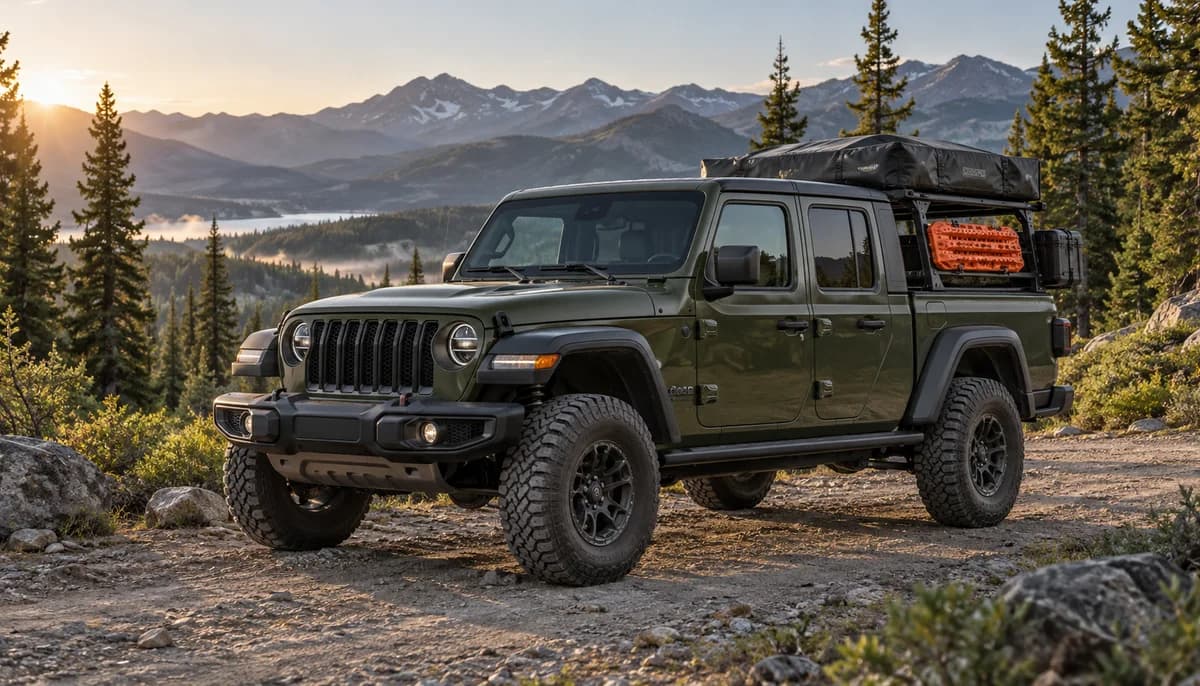
A good overland setup earns its space on an ordinary weekend. You can find the stove before dark, reach the recovery bag without unloading the bed, and pack up in the morning without rebuilding a puzzle.
Before buying a rack or a rooftop tent, describe the trip you actually take. Two nights at an established campsite and a week moving between remote camps call for different packing plans. Start with that difference and let it shape the truck.
In this guide
Start with a trip, not a shopping list
Write down your usual passenger count, sleeping arrangement, meal plan and the gear that already comes with you. Separate essentials from items you have been carrying out of habit. A folding chair that gets used at every stop deserves its space more than a large accessory that only looks useful.
Jeep's published Gladiator payload and towing figures depend on configuration. Treat a headline maximum as a starting point for research, not the allowance for your particular truck. Check the labels and manual for your own vehicle before planning a loaded build.
Make a bed map before choosing a rack
Lay out your existing camping equipment on the garage floor in an area the size of the usable bed. Decide what must be reached first: food, drinking water, rain gear or the recovery bag. Keep those items accessible when everything else is packed.
A useful layout has a place for dirty equipment and a separate place for bedding and clothing. Removable bins are a good way to test that arrangement before committing to permanent drawers. Label the ends you can see from the tailgate, rather than the lids that disappear under other equipment.
Choose shelter around your routine
Ask what happens when you arrive late, when the campsite is wet, and when you want to leave camp for the afternoon. A ground tent lets camp stay in place while the truck moves. A vehicle-mounted tent changes that routine, so think through setup and teardown before ordering one.
Make a mock packing list for both options. Include bedding, the ladder or groundsheet, wet-weather storage and the equipment you would have to move to reach the shelter. The best option is the one that fits your actual routine without a long sequence of workarounds.
Give every accessory a reason to stay
Build in stages. First, organize the gear you already own. Then take a short trip and write down what was awkward. An inaccessible cooler is a specific problem you can solve; the feeling that the truck needs more accessories is not.
Use the same test for lighting and electrical equipment. List the devices you need, where you use them and how you intend to recharge them. Have the installation planned around those requirements and the equipment manufacturer's instructions instead of adding loose wiring one device at a time.
Practice the whole camp routine
Do a complete setup at home, including cooking, opening every storage box and packing away damp equipment. Notice which items block other items. This is also the time to discover that a rack prevents a cover from opening or that the tailgate is your only work surface.
On the first trip, leave time to make notes. Record what you never touched, what you reached for repeatedly and what took too long to pack. The list becomes a more useful build plan than a collection of other people's finished trucks.
A simple first-trip checklist
Choose a familiar destination for the first outing with a new setup. The aim is to learn your packing system while enjoying the trip, not to prove every accessory at once.
After returning, empty the bed and review the system. Keep the changes that saved effort, remove the gear that did not earn its place, and plan only the next improvement. A useful Gladiator build is allowed to evolve.